

HFT FPGA Card: The Real Latency Edge in High-Frequency Trading
In high-frequency trading, performance is not measured in seconds or milliseconds. It is measured in microseconds — and increasingly, in nanoseconds. In this environment, software optimization alone is insufficient. True competitive advantage lies in hardware acceleration.
The HFT FPGA Card is not a luxury component in modern trading infrastructure — it is the structural backbone of serious latency-sensitive strategies.
As a professional deeply involved in algorithmic and ultra-low-latency environments, I can state unequivocally: once you understand FPGA-level execution, traditional CPU-based architectures begin to look structurally inefficient.
This article provides a deep, professional perspective on:
- What an HFT FPGA Card is
- Why it matters in exchange co-location environments
- How it compares with CPU and GPU processing
- Real-world applications in arbitrage and market making
- Infrastructure design considerations
- Regulatory and compliance implications
What is an HFT FPGA Card?



4
An FPGA (Field-Programmable Gate Array) is a semiconductor device that can be configured at the hardware level after manufacturing. Unlike CPUs that execute instructions sequentially, FPGAs implement custom logic circuits that operate in parallel — at hardware speed.
An HFT FPGA Card is a PCIe accelerator card deployed inside a low-latency trading server, typically in exchange co-location racks.
Leading providers include:
- AMD (via Xilinx Alveo platforms)
- Intel (Intel FPGA solutions)
- NVIDIA (though primarily GPU-focused, increasingly present in accelerated trading stacks)
Unlike general-purpose processors, FPGAs are designed to:
- Parse market data at wire speed
- Normalize exchange protocols in hardware
- Execute trading logic deterministically
- Transmit orders without OS-level delays
Why FPGA Matters in HFT
1. Deterministic Latency
CPU-based systems suffer from:
- Context switching
- Cache misses
- Kernel scheduling delays
- Interrupt handling overhead
An FPGA eliminates these variables. Logic is implemented directly in silicon pathways.
Latency becomes:
- Predictable
- Repeatable
- Deterministic
In statistical arbitrage and cross-exchange arbitrage, predictability is more important than raw speed.
2. Wire-to-Wire Processing


4
In optimized deployments:
- Market data arrives via fiber
- Network interface passes packets directly to FPGA
- FPGA parses FIX/OUCH/ITCH protocols in hardware
- Trading decision is triggered
- Order is sent back out — all without CPU involvement
This is known as wire-to-wire latency optimization.
FPGAs can reduce internal processing latency to sub-500 nanoseconds in optimized environments.
3. Parallelism at Hardware Level
CPUs process instructions sequentially (even with multiple cores).
FPGAs:
- Implement thousands of logic gates working simultaneously
- Run multiple trading models in parallel
- Process multiple market feeds concurrently
For multi-venue arbitrage or market making across instruments, this is transformative.
CPU vs GPU vs FPGA in Trading
| Feature | CPU | GPU | FPGA |
|---|---|---|---|
| Flexibility | High | Medium | Medium |
| Determinism | Low | Medium | Very High |
| Latency | Microseconds | Microseconds | Nanoseconds |
| Parallelism | Core-based | Massive | Hardware-level |
| Best For | Strategy logic | Backtesting / AI | Ultra-low-latency execution |
GPUs (from NVIDIA) dominate in AI-driven analytics.
FPGAs dominate in latency-sensitive order execution.
In elite trading environments, a hybrid stack is common:
- CPU for orchestration
- GPU for modeling
- FPGA for execution
Real Applications of HFT FPGA Cards
1. Exchange Arbitrage
Latency arbitrage between two exchanges requires:
- Simultaneous feed processing
- Hardware-level spread calculation
- Immediate order dispatch
Any microsecond delay eliminates edge.
2. Market Making
Market making requires:
- Continuous bid-ask updates
- Instant inventory-based price adjustment
- Risk checks before order placement
FPGA-based risk checks reduce rejection probability while preserving latency advantage.
3. Options Pricing Engines
In derivatives trading:
- Black-Scholes or volatility models can be pre-implemented in hardware
- Greeks calculated in real time
- Quote updates triggered by underlying movement
This is particularly effective in index options environments.
FPGA in Co-Location Environments


4
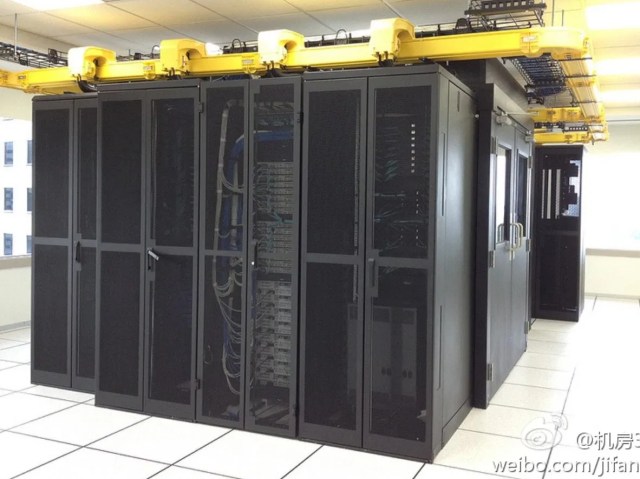
True benefit of an HFT FPGA Card emerges inside exchange co-location.
Exchanges such as:
- National Stock Exchange of India
- Bombay Stock Exchange
- Chicago Mercantile Exchange
offer co-location services where trading servers are placed meters away from matching engines.
In such setups:
- Fiber distance matters
- Switch hop count matters
- Kernel bypass (Solarflare, Exablaze NICs) matters
- FPGA integration matters most
Infrastructure Requirements for HFT FPGA Deployment
1. Specialized Development
FPGA programming requires:
- VHDL or Verilog
- High-Level Synthesis (HLS)
- Hardware simulation tools
It is not conventional software engineering.
2. Power & Cooling
FPGA cards consume significant power.
Data center considerations:
- Rack power limits
- Heat dissipation
- Redundant power supplies
3. Cost Implications
FPGA cards can range from $5,000 to $25,000+ per unit depending on model and capability.
Additionally:
- Development team cost
- Testing infrastructure
- FPGA firmware maintenance
Only strategies with strong alpha and scalable edge justify such capital expenditure.
Risk Controls on FPGA
Professional setups integrate:
- Pre-trade risk checks
- Order throttling
- Kill switches
- Message rate controls
Regulatory frameworks increasingly require deterministic risk mechanisms at hardware level.
For Indian markets, regulatory oversight by Securities and Exchange Board of India has emphasized risk controls in algorithmic trading and co-location environments.
FPGA and Compliance
Hardware-level speed does not exempt firms from:
- Audit logs
- Order-to-trade ratio monitoring
- Fair access compliance
- Surveillance integration
Exchanges and regulators globally are scrutinizing ultra-low latency systems to ensure market integrity.
When Should a Trading Desk Use an HFT FPGA Card?
You should consider FPGA acceleration if:
- Strategy holding period < 1 second
- Competing with professional market makers
- Operating in co-location
- Latency sensitivity is core alpha driver
- Capital base supports infrastructure scale
If you are running swing trading models, FPGA is unnecessary.
The Future of FPGA in Trading
Emerging trends:
- SmartNIC integration
- Embedded AI on FPGA
- Hybrid FPGA-GPU stacks
- Exchange-native hardware gateways
Vendors are increasingly offering turnkey FPGA solutions with pre-built feed handlers.
However, serious proprietary desks still build custom firmware — because commoditized speed is no edge.
Strategic View: Is FPGA the Ultimate Edge?
Speed alone does not guarantee profitability.
However, in:
- Latency arbitrage
- Market making
- Order book prediction
- Microstructure exploitation
FPGA can convert marginal statistical edge into consistent revenue.
In HFT, the difference between 800 nanoseconds and 2 microseconds can define yearly P&L.
That is not exaggeration — it is structural reality.
External Resources for Deep Technical Understanding
For readers wanting to explore technical documentation:
- AMD FPGA Solutions: https://www.amd.com/en/products/adaptive-socs-and-fpgas
- Intel FPGA Platform: https://www.intel.com/content/www/us/en/products/details/fpga.html
- CME Co-location Services: https://www.cmegroup.com/market-data/colocation-services.html
- NSE Co-location Overview: https://www.nseindia.com/trade/co-location-facility
Final Thoughts
The HFT FPGA Card is not merely a hardware upgrade.
It is:
- A structural latency weapon
- A deterministic execution engine
- A competitive moat
In high-frequency trading, the market does not reward intention — it rewards speed, precision, and predictability.
If your trading desk is operating at serious scale, hardware acceleration is not optional.
It is inevitable.
🧠 High-Frequency Trading (HFT) & Infrastructure
- Automatic Kill-Switches in HFT Systems: The First Line of Survival
https://algotradingdesk.com/automatic-kill-switch-hft-risk-management/
→ Explains programmatic kill-switches that halt trading when loss thresholds or system anomalies occur. - High-Frequency Market Microstructure Tip: Liquidity Is Informational
https://algotradingdesk.com/high-frequency-market-microstructure-liquidity-is-informational/
→ Explains liquidity as an informational signal influencing price formation and execution quality. - GPU-Accelerated Backtesting: Reducing Strategy Research Time by 80%
https://algotradingdesk.com/gpu-accelerated-backtesting-reducing-strategy-research-time/
→ Shows how GPU parallelization dramatically improves backtesting speed and research throughput.


